Semiconductor equipment support
Equipment O-rings, flat gaskets and custom profiles selected for the operating environment.

JINGUI / FUMED-SILICA-REINFORCED SILICONE
Fumed-silica-reinforced solid and liquid silicone rubber. Compare QX and LSR grades, physical properties and processing parameters.
Discuss your application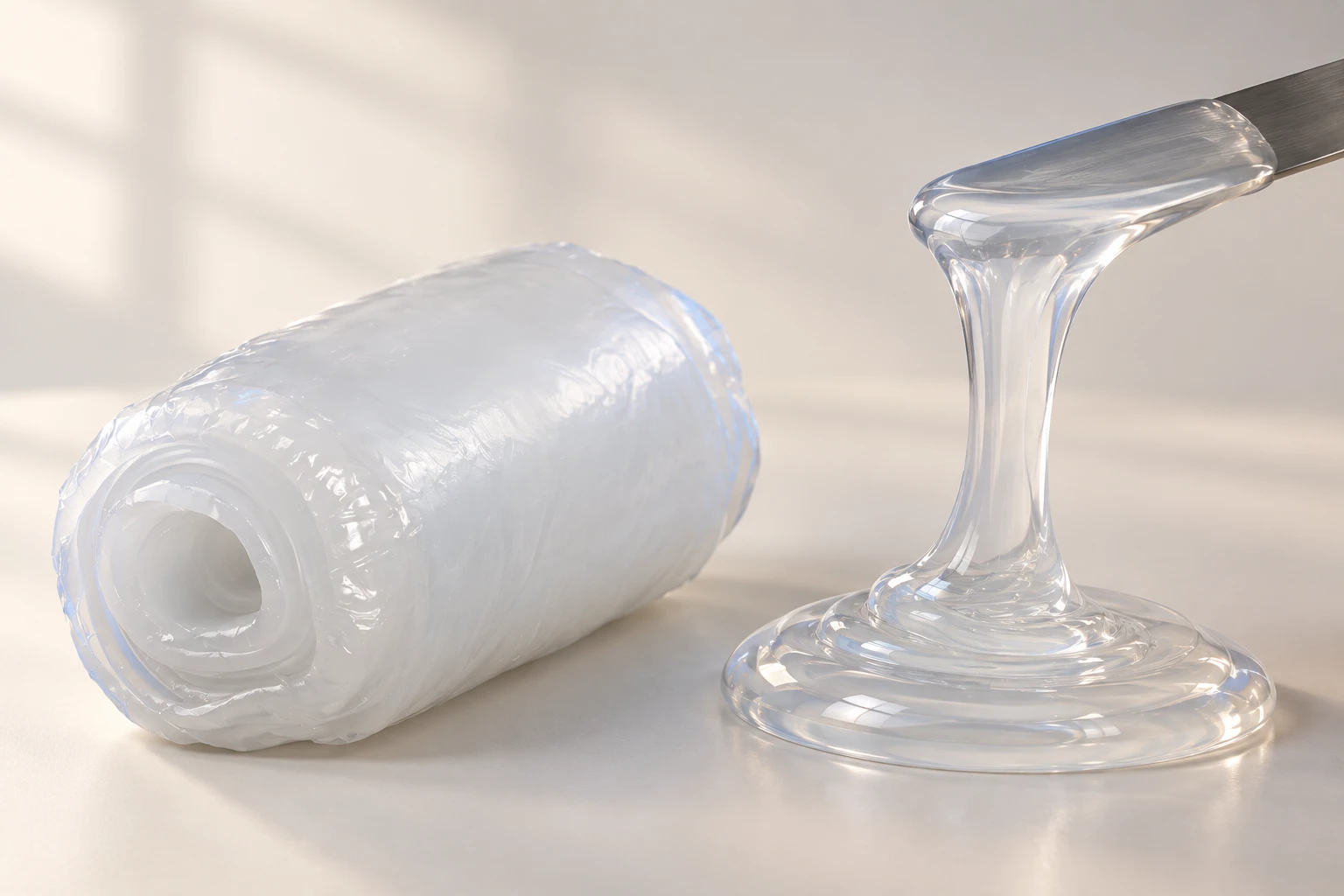
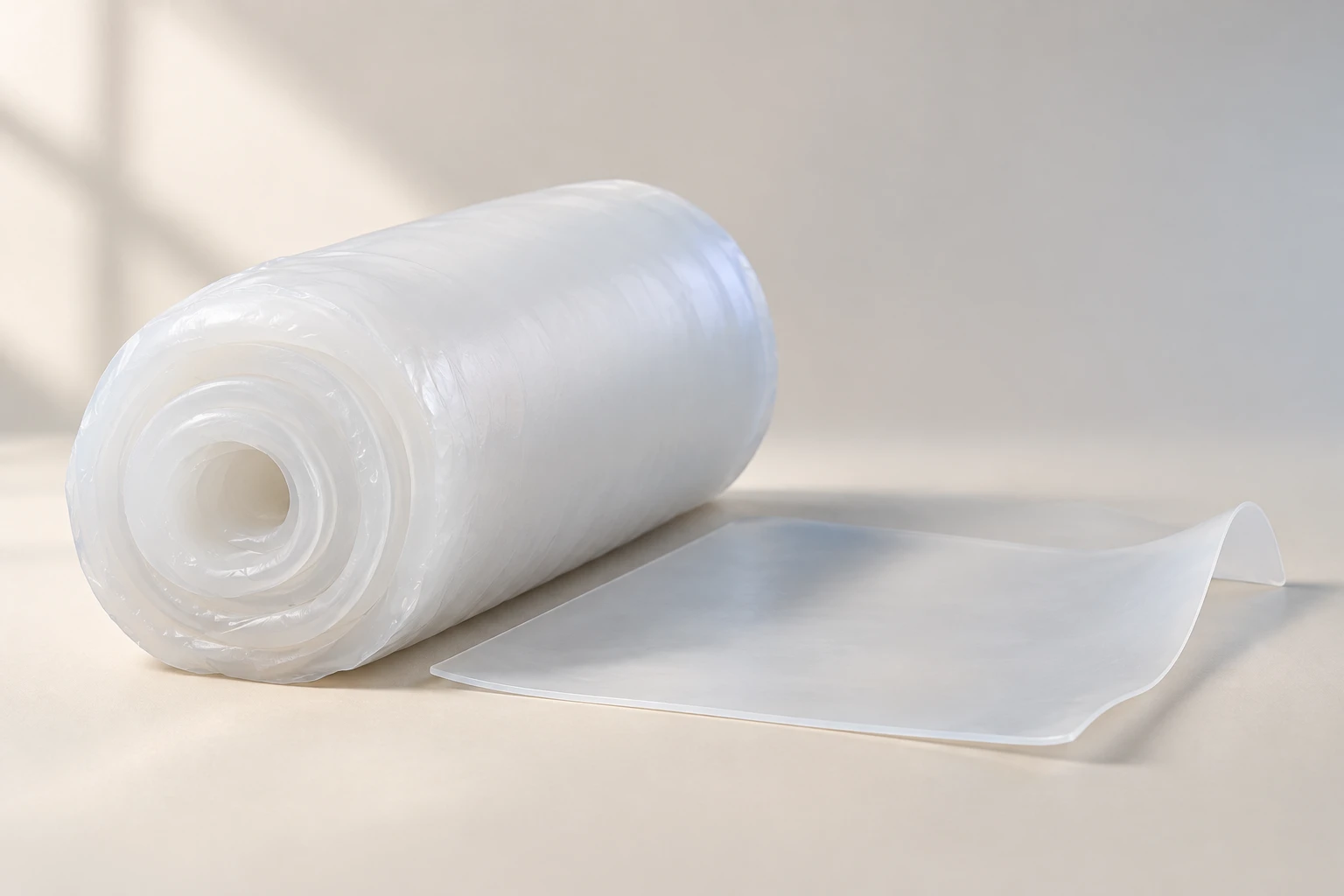
HIGH CONSISTENCY SILICONE RUBBER / HCR
Translucent, pliable solid compounds with fumed-silica reinforcement. T, S and G series address transparency, designated food / medical applications and high tear resistance.
Transparent accessories · Seals and gaskets · Flexible sleeves and profiles
QX SERIES / TECHNICAL DATA
Grade code = series + nominal hardness + performance suffix.
| Grade | Hardness / Shore A | Density / g/cm³ | Tensile strength / MPa | Elongation at break / % | Tear strength / kN/m |
|---|---|---|---|---|---|
| QX20T | 20±2 | 1.20±0.02 | ≥8.5 | ≥400 | ≥18 |
| QX30T | 30±2 | 1.20±0.02 | ≥8.5 | ≥400 | ≥18 |
| QX40T | 40±2 | 1.20±0.02 | ≥8.5 | ≥400 | ≥18 |
| QX50S | 50±2 | 1.21±0.02 | ≥9.5 | ≥380 | ≥22 |
| QX60S | 60±2 | 1.21±0.02 | ≥9.5 | ≥380 | ≥22 |
| QX50G | 50±2 | 1.23±0.02 | ≥11.0 | ≥350 | ≥25 |
| QX60G | 60±2 | 1.23±0.02 | ≥11.0 | ≥350 | ≥25 |
| QX70G | 70±2 | 1.23±0.02 | ≥11.0 | ≥350 | ≥25 |
Handbook specification values. Hardness and mechanical properties refer to cured rubber; liquid viscosity is specified at 25°C. *S is the handbook series designation, not a blanket certification claim. Request grade-specific technical data and applicable compliance documentation.
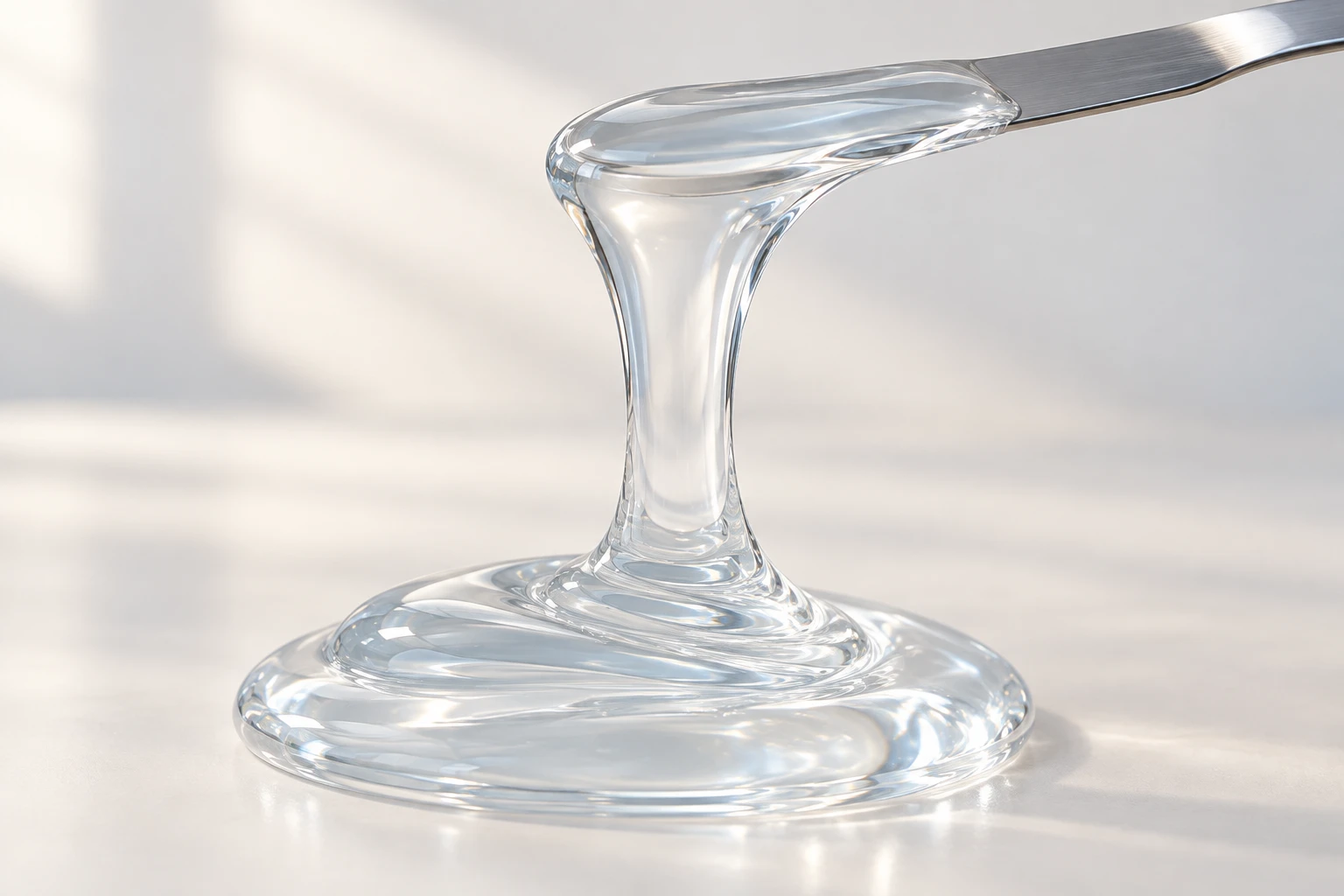
LIQUID SILICONE RUBBER / LSR
Transparent, highly viscous A/B compounds with fumed-silica reinforcement and a platinum-catalysed curing system for liquid injection moulding.
Precision seals · Thin-wall moulded parts · Transparent functional components
LSR SERIES / TECHNICAL DATA
Grade code = series + nominal hardness + performance suffix.
| Grade | Hardness / Shore A | Density / g/cm³ | Viscosity / Pa·s at 25°C | Tensile strength / MPa | Elongation at break / % | Tear strength / kN/m |
|---|---|---|---|---|---|---|
| LSR20T | 20±3 | 1.10±0.02 | 150±20 | ≥7.5 | ≥600 | ≥20 |
| LSR30T | 30±3 | 1.10±0.02 | 150±20 | ≥7.5 | ≥600 | ≥20 |
| LSR40T | 40±3 | 1.10±0.02 | 150±20 | ≥7.5 | ≥600 | ≥20 |
| LSR50S | 50±3 | 1.12±0.02 | 160±20 | ≥9.0 | ≥550 | ≥28 |
| LSR60S | 60±3 | 1.12±0.02 | 160±20 | ≥9.0 | ≥550 | ≥28 |
| LSR50G | 50±3 | 1.14±0.02 | 180±20 | ≥10.5 | ≥450 | ≥35 |
| LSR60G | 60±3 | 1.14±0.02 | 180±20 | ≥10.5 | ≥450 | ≥35 |
| LSR70G | 70±3 | 1.14±0.02 | 180±20 | ≥10.5 | ≥450 | ≥35 |
Handbook specification values. Hardness and mechanical properties refer to cured rubber; liquid viscosity is specified at 25°C. *S is the handbook series designation, not a blanket certification claim. Request grade-specific technical data and applicable compliance documentation.
CORE PERFORMANCE & PROCESSING
Reference values from the product handbook. Confirm the selected grade, cure conditions and part geometry before setting production parameters.
| Parameter | Solid silicone rubber / QX | Liquid silicone rubber / LSR |
|---|---|---|
| Compression set · 180°C × 22 h | ≤28%; high-end grades ≤25% | ≤22%; high-tear precision grades ≤20% |
| Rebound resilience | ≥50%; high-tear grades ≥55% | ≥58%; high-tear grades ≥62% |
| Temperature range · handbook | −60 to 230°C | −60 to 250°C |
| Volume resistivity | ≥1.0 × 10¹⁵ Ω·cm | ≥1.2 × 10¹⁵ Ω·cm |
| Dielectric strength | ≥22 kV/mm | ≥25 kV/mm |
| Forming process | Compression moulding / extrusion | Dedicated liquid silicone injection moulding |
| Cure system | DBPH peroxide cure system | Platinum-catalysed, two-component A/B |
| A:B mixing ratio | Not applicable | 1:1 |
| Cure temperature | 170–180°C | 120–150°C |
| Cure time | 5–8 min | Confirm for grade and part geometry |
| Moulding shrinkage | Not specified in handbook | 1.8–2.5% |
Temperature ranges are handbook references, not a guarantee of continuous service under every load or environment. Final processing conditions and performance depend on the selected grade and curing conditions.
Hardness: GB/T 531.1-2008 · Tensile strength / elongation: GB/T 528-2009 · Tear strength: GB/T 529-2008 · Compression set: GB/T 7759.1-2015 · Liquid viscosity: GB/T 2794-2013.
Test method editions are reproduced from the supplied handbook. Request the applicable test conditions and current grade documentation for qualification.
APPLICATION DIRECTIONS
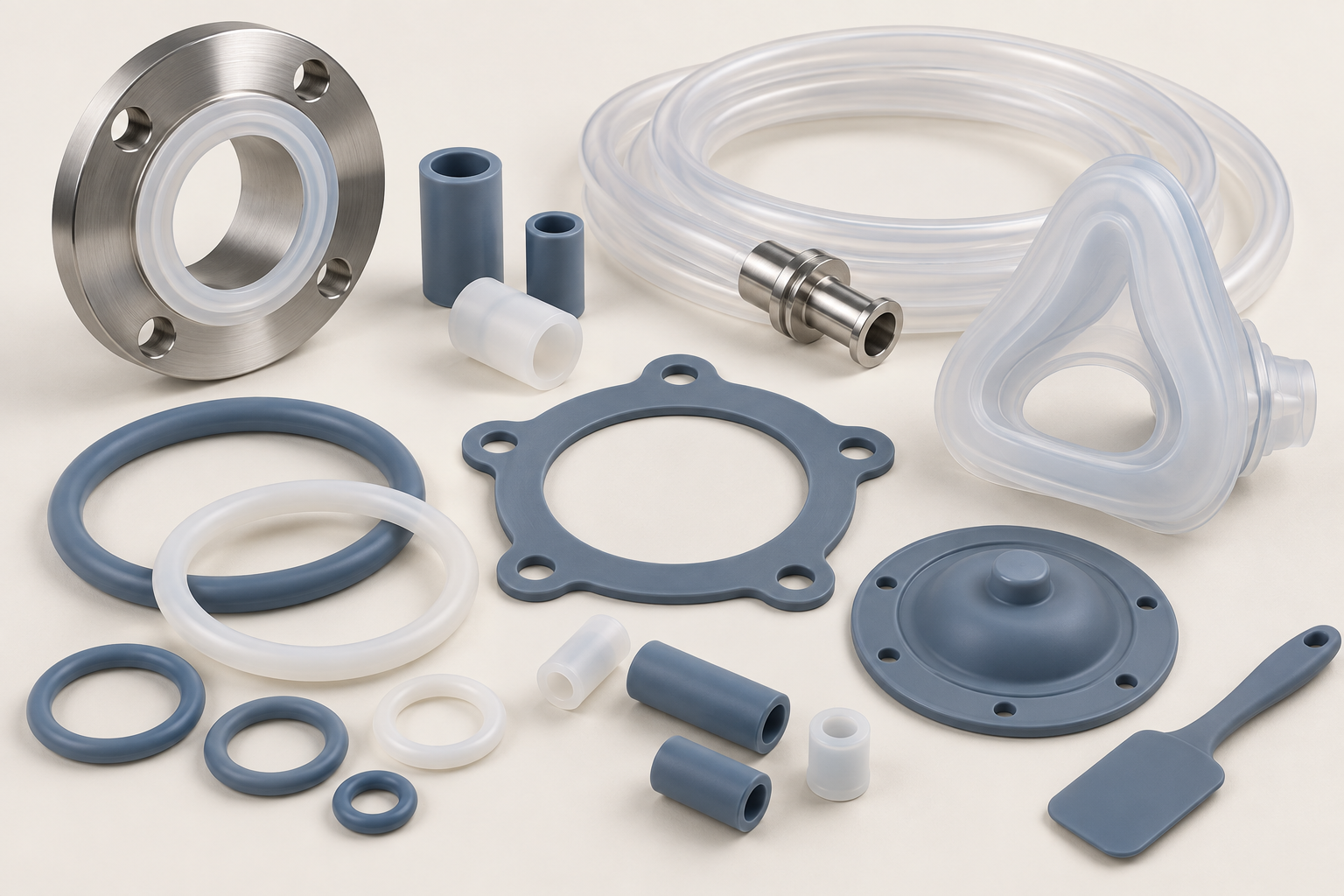
Equipment O-rings, flat gaskets and custom profiles selected for the operating environment.
Flexible tubing, connector seals and diaphragms for fluid-handling assemblies.
Mask cushions, soft interfaces and precision molded device parts.
Custom gaskets, insulating sleeves and protective boots matched to the assembly and operating conditions.
A smaller selection of kitchen accessories and soft-touch consumer parts.
Application concepts, not product certifications. Semiconductor uses require equipment-specific qualification; plasma-facing and aggressive-chemical service need separate material assessment. Medical, bioprocess and food-contact uses require suitable grades and intended-use validation.
LET’S TALK MATERIALS
Tell us the application, forming process, target hardness and appearance you need.