Trace-element chemistry
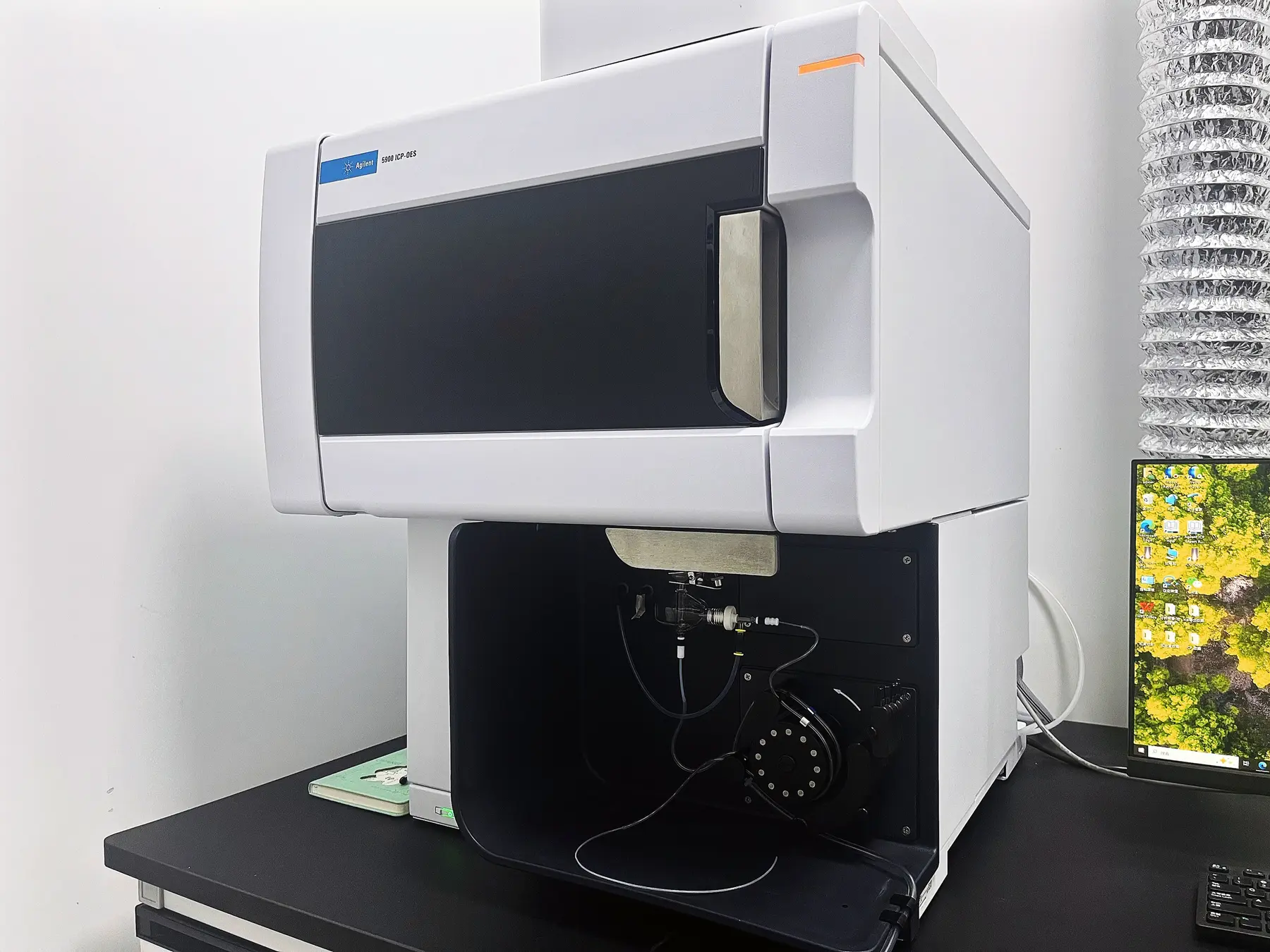
ICP-OES analysis of the impurity profile used to screen sources, compare purification stages and review production batches.

Jingui Testing Center · In-house laboratory
We test quartz ore, quartz sand and silica powder for trace chemistry, particle distribution, mesh control and agreed supporting indicators—then deliver the data in a traceable technical report.
What we test
Packages can be used for source screening, incoming inspection, treatment comparison, product grading or batch review. Scope, preparation and reporting basis are agreed before the sample enters the laboratory.
ICP-OES analysis of the impurity profile used to screen sources, compare purification stages and review production batches.
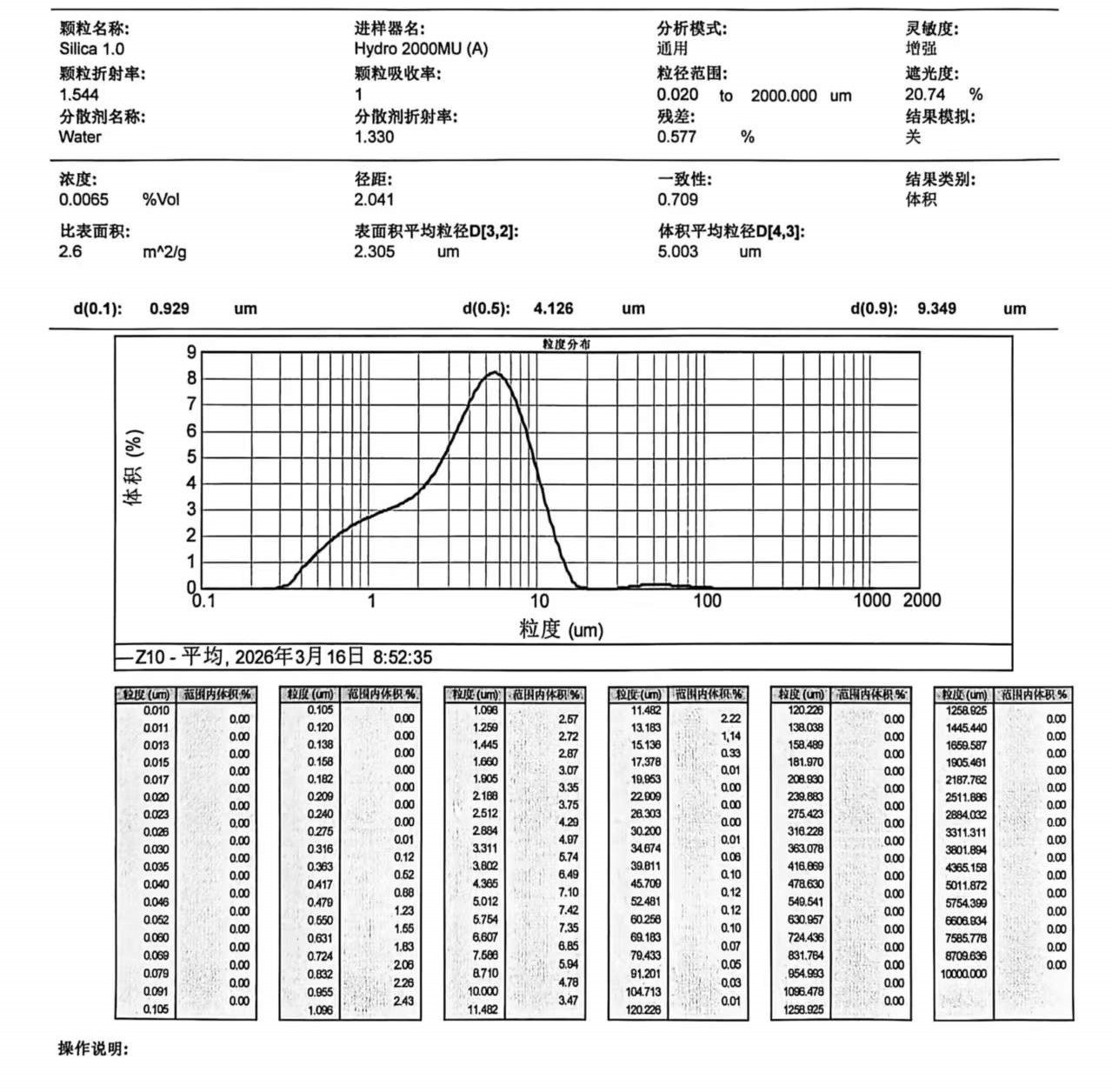
Laser-diffraction results including the full distribution curve and characteristic D10, D50 and D90 values.
Retained and passing fractions against an agreed mesh or aperture sequence for grading and process control.
Fe₂O₃, whiteness, electrical conductivity and agreed ion tests provide supporting information alongside trace chemistry and particle-size data.
Side-by-side evaluation of ore, quartz sand or silica powder to support sourcing, process adjustment and batch review.
01 / Trace chemistry
Our 13-element ICP-OES panel is designed for quartz and silica decisions. It helps compare different sources, read changes before and after treatment, and review whether a batch remains inside the agreed control window.
02 / Particle & mesh control
Laser diffraction and sieve analysis answer different questions. One describes the whole particle population; the other shows how much material falls inside the mesh window used by production or purchasing.
Laboratory configuration
The laboratory combines elemental and particle analysis with controlled weighing, preparation, appearance measurements and optical observation.
Used for the defined 13-element trace-impurity panel after the agreed sample-preparation route.
Laser-diffraction particle analysis with a distribution curve and D10, D50 and D90 values.
Measures retained and passing fractions against the mesh or aperture sequence selected for the job.
Analytical balances, a muffle furnace and PTFE vessels support weighing, heat treatment and preparation under the selected analytical method.
Measures selected elements using an element-specific method; it complements ICP-OES within the agreed test scope.
Measure agreed ions and solution conductivity under defined preparation conditions; conductivity is not a direct test of solid-quartz insulation.
Compares optical appearance for colour-sensitive materials. Whiteness is evaluated alongside chemical results, not used as a purity assay.
Observes particle shape, visible inclusions and surface appearance. Nanoscale features require suitable electron-microscopy evidence.
Submission workflow
Confirm the material, application and the decision the results need to support.
Register sample identity, condition, quantity and customer reference before testing.
Split, dry, digest, disperse or sieve the material according to the agreed route.
Run trace chemistry, particle-size or mesh testing with the selected instruments.
Check the result set, units, curves and any relevant sample or method limitations.
Issue a traceable result package and explain what the data means for the stated question.
What you receive
Reports connect each result with the sample identity, method and units. Selected particle-size, whiteness and Fe indicators can support incoming inspection or processing-batch review.
Request a testing plan →Customer reference, material identity, receipt condition and preparation notes.
Selected test route, units, measurement conditions and agreed reporting basis.
Element values, distribution curve, D-values or retained and passing fractions.
Relevant observations, comparison notes and limitations attached to the result.
Sample quantity, preparation, test items, fees, turnaround and reporting limits are confirmed before acceptance. Unless specifically agreed and supported by the applicable qualification, the deliverable is a technical test report rather than statutory or accredited third-party certification.
Submit a testing enquiry
Share the material type, sample form, required indicators, expected range and intended use of the results. Our team will confirm preparation, method, sample quantity, fee and turnaround before acceptance.
Discuss a sample →