Crystalline & fused quartz sand · 4N8–6N

From natural quartz to 6N-level impurity control.

Crystalline grades reach 6N and fused grades reach 5N8. Material structure, trace chemistry and particle-size distribution are matched to your process, with standard and customized particle ranges available.

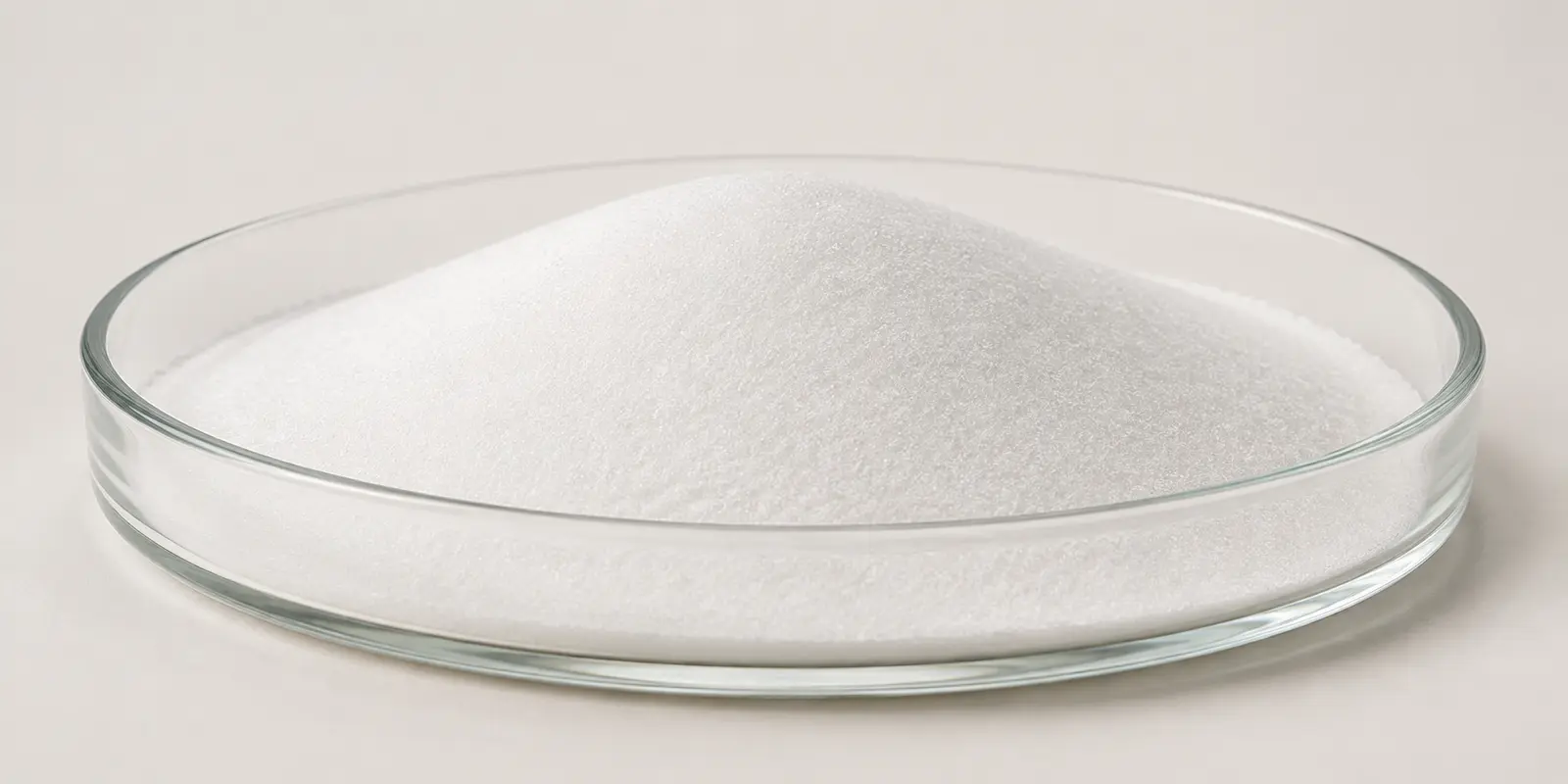
High-purity quartz sand presented in a clean laboratory dish
High-purity quartz sand · controlled material platform
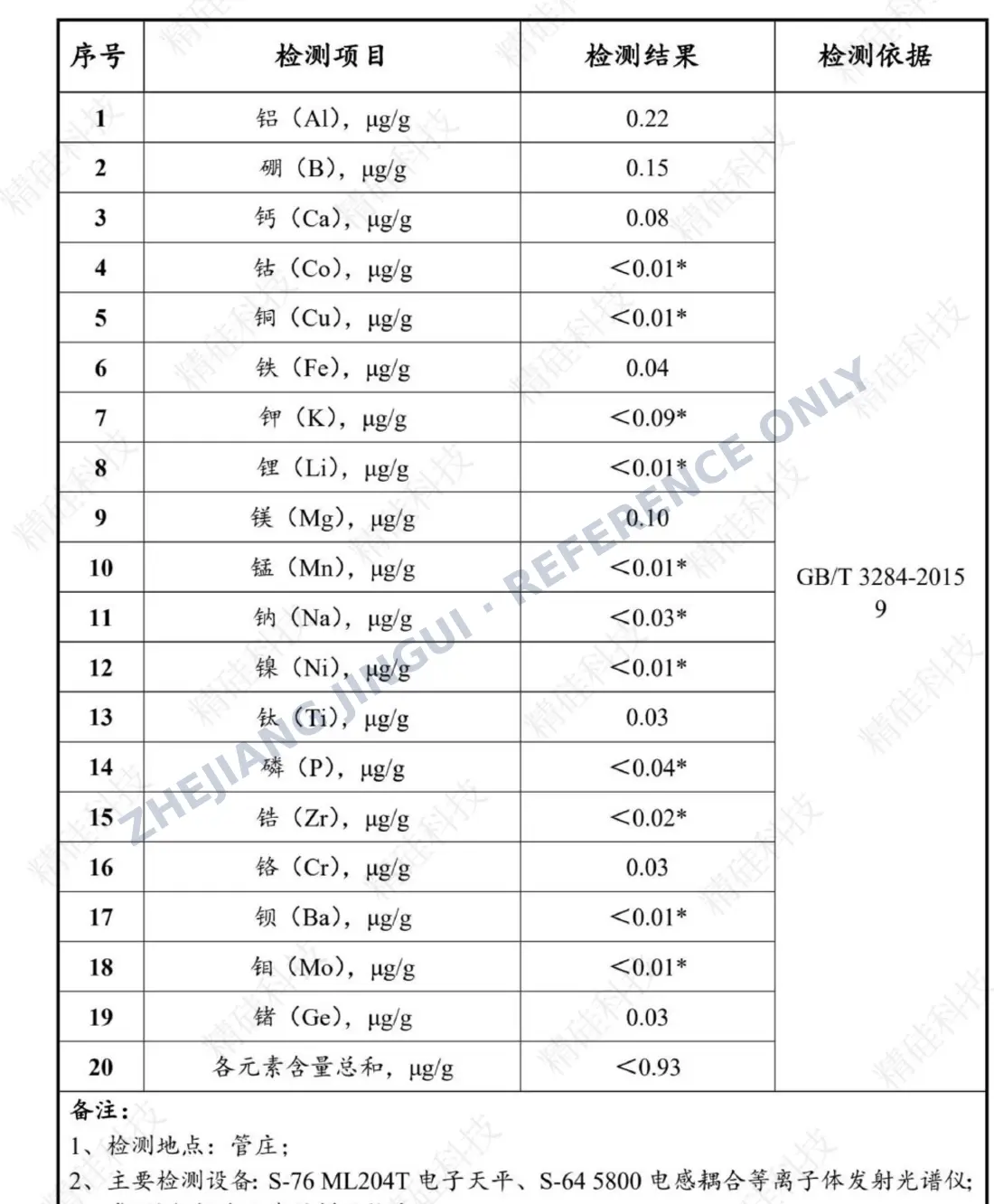
Crystalline sample · impurity sum<0.93 ppm
Iron · Fe0.04 ppm
Titanium · Ti0.03 ppm
Lithium · Li<0.01 ppm

Two material structures

The same purity grade does not mean the same material route.

4N8–6N describes chemical purity; crystalline and fused describe the silica structure. Jingui supplies both forms consistently, then matches trace chemistry, particle distribution and process behaviour to the customer's actual use.

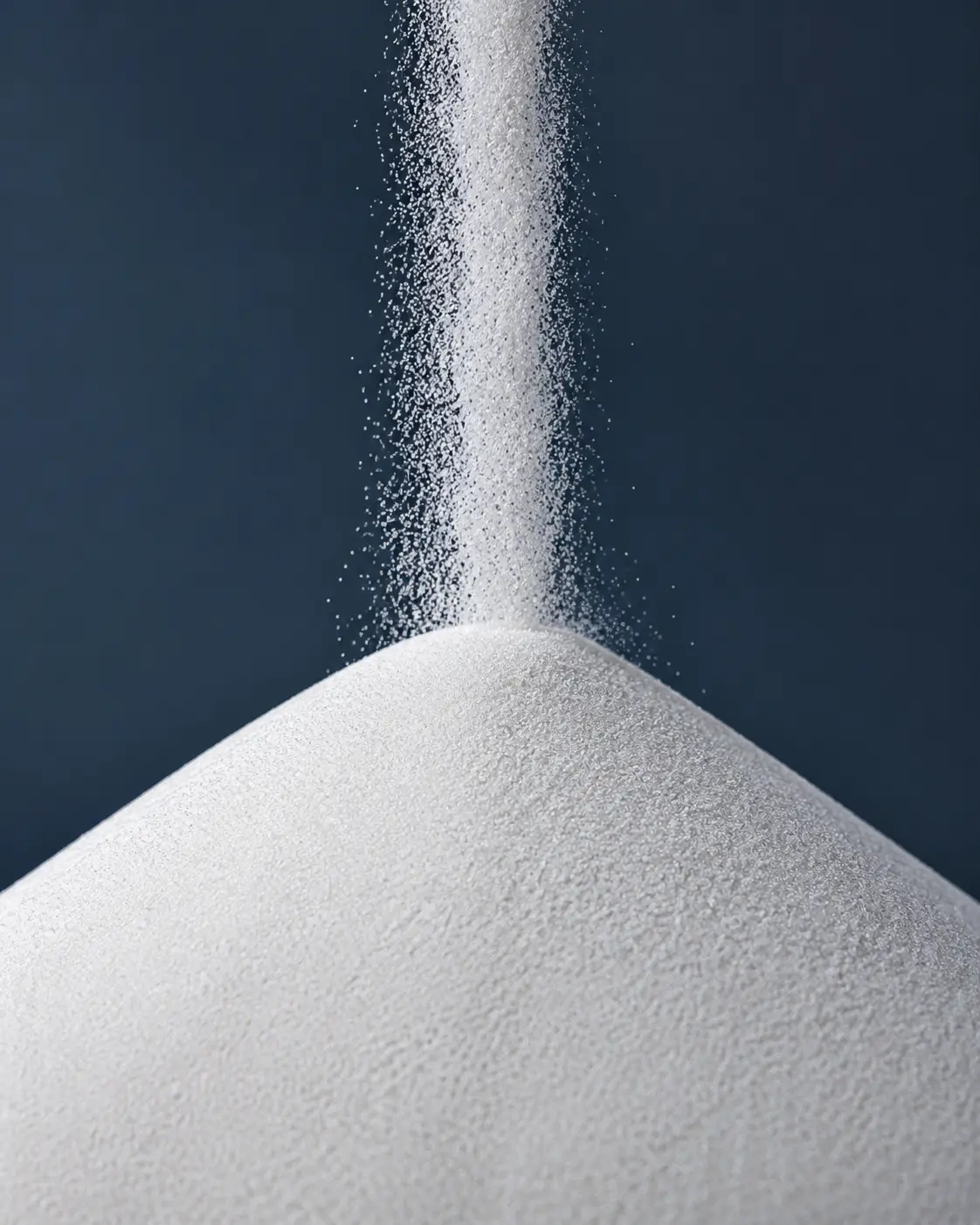
Milky-white crystalline high-purity quartz sand falling into a controlled particle mound
01 / Crystalline structure

Crystalline high-purity quartz sand

Retains the ordered crystal structure of natural quartz. It is an important feedstock for fused-quartz crucibles, tubes, rods and other high-purity quartz-glass products. Qualification considers the trace-element profile together with inclusions, particle distribution and behaviour during melting.

Supply
4N8 · 5N · 5N5 · 6N
Control
Trace chemistry · inclusions · fusion response
Sizing
Standard ranges or customer specification
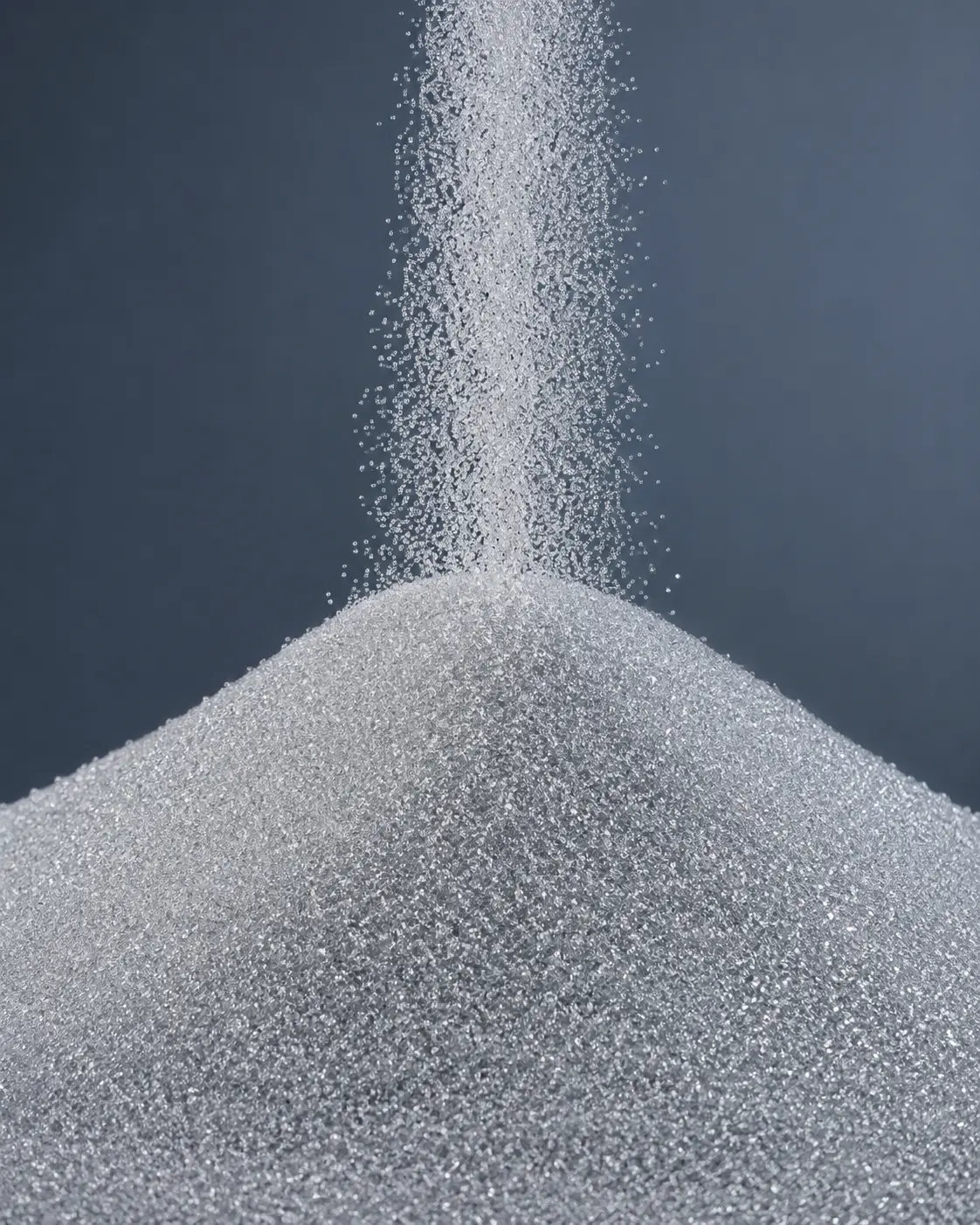
Transparent glass-like fused high-purity quartz sand falling into a controlled particle mound
02 / Amorphous glass structure

Fused high-purity quartz sand

Produced by melting quartz into an amorphous glass body before crushing, shaping and classification. Compared with the crystalline route, its structure supports lower thermal expansion and stronger thermal-shock resistance for systems that prioritize dimensional stability and repeated heat cycles.

Supply
4N8 · 5N · 5N5 · 5N8
Control
Purity · amorphous state · thermal behaviour
Sizing
Standard ranges or customer specification
Two strengths behind the 6N route

Exceptional ore.
Purpose-built purification.

Selected ore from our wholly owned Myanmar resource provides the starting material for 6N purification. Our process technology turns that potential into a verified high-purity material route.

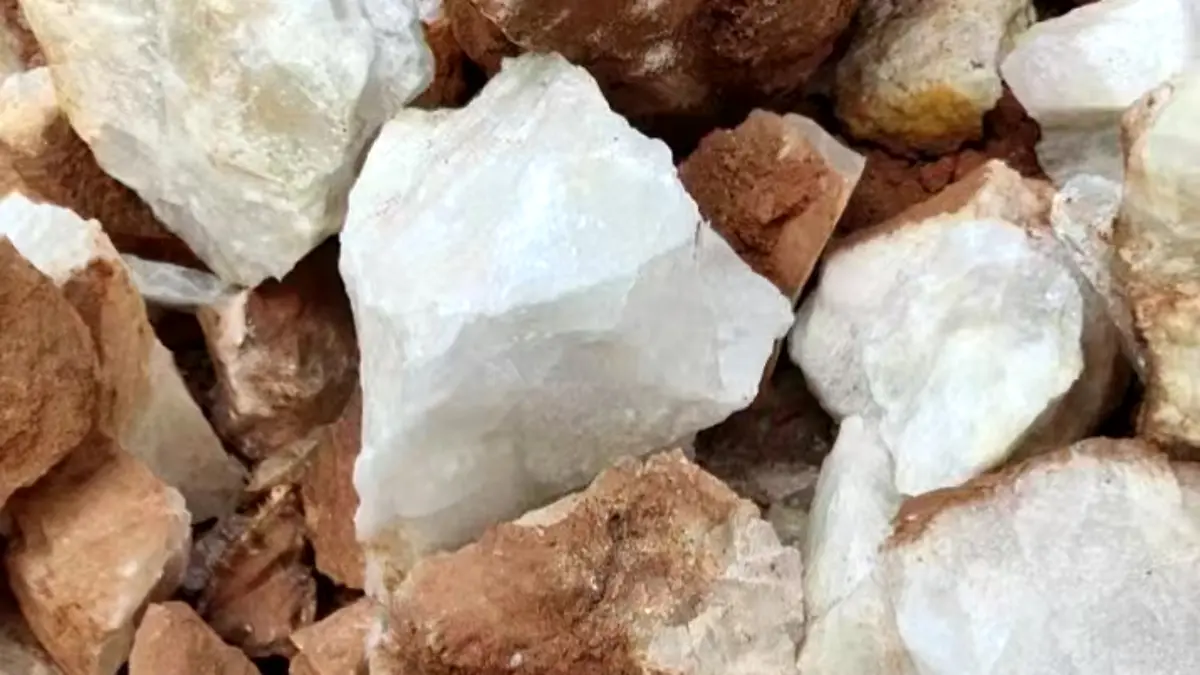
Quartz ore from Jingui’s Myanmar mineral resource01 / Source quality

Our quartz ore reserves have exceptionally high natural purity.

SP2 · RAW ORE

Representative Myanmar ore assay. All concentrations below are in ppm.

Reported impurity total
12.120 ppm
Alkalis · K + Na + Li
0.915 ppm
Iron · Fe
0.065 ppm
Boron · B
0.003 ppm
View the full SP2 ore assay +
SP2 raw ore · 18 measured elements · ppm
ElementppmElementppm
Al8.762Ca0.446
Cu0.007Fe0.065
K0.088Na0.433
Li0.394B0.003
Co0.011Mg0.041
Mn0.002Cr0.016
Ni0.009Ti1.215
Zr0.144Ba0.009
Ge0.469P0.006
Company-supplied raw-ore assay, before purification. SP2 is not a finished 6N sand sample; the finished-sand test evidence is presented separately below.Explore our Myanmar resource

02 / Purification technology

Good ore is the beginning.
Process control makes the difference.

Ore characterization guides the purification sequence. Physical, chemical and thermal processing are matched to the material, followed by particle control and analytical verification.

  1. 01

    Understand the ore

    Identify trace impurities and their occurrence in the mineral.

  2. 02

    Design the purification route

    Connect source selection with targeted purification and contamination control.

  3. 03

    Verify the finished material

    Confirm chemistry and particle distribution against the intended grade.

Representative finished-sand test<0.93 ppm

Reported sum of 19 measured impurity elements in the crystalline sample.

View the finished-sand test report

Crystalline route · third-party representative sample

6N-level control, shown element by element.

A 60–160 mesh crystalline high-purity quartz sand sample was tested by the National Quality Inspection and Testing Center for Safety Glass and Quartz Glass. The reported sum of 19 measured impurity elements was below 0.93 μg/g.

Aluminium
0.22 ppm
Boron
0.15 ppm
Calcium
0.08 ppm
Magnesium
0.10 ppm
View all 19 measured elements +

Al 0.22 · B 0.15 · Ca 0.08 · Co <0.01 · Cu <0.01 · Fe 0.04 · K <0.09 · Li <0.01 · Mg 0.10 · Mn <0.01 · Na <0.03 · Ni <0.01 · Ti 0.03 · P <0.04 · Zr <0.02 · Cr 0.03 · Ba <0.01 · Mo <0.01 · Ge 0.03 ppm.

Representative entrusted-test result. Values marked “<” are below the method detection limit. Final supply requirements follow the agreed specification and batch COA.
Watermarked and redacted extract of third-party high-purity quartz sand test results
Crystalline 60–160 mesh sample · desensitized result extract

Stable commercial grades

One material platform.
Four supply levels.

The grade range covers both material structures. The 6N level applies to crystalline quartz sand; fused grades reach 5N8. Exact chemistry, particle range and acceptance method are confirmed for the selected grade.

014N8

Industrial high-purity grade

For applications requiring controlled metallic impurities and reliable industrial-scale consistency.

Stable supply
025N

Advanced material grade

Balanced purity and particle control for high-temperature quartz and specialty glass routes.

Stable supply
035N5

Enhanced low-impurity grade

A tighter multi-element window for processes with more demanding contamination limits.

Stable supply
046N

Ultra-high-purity grade

Sub-ppm measured impurity control for demanding qualification and high-value quartz applications.

Crystalline test evidence

Particle engineering

Specify the window.
We build the distribution.

Jingui combines in-house jet milling with calibrated standard sieves. Standard ranges and customer-defined specifications can be prepared around the actual feeding, forming, melting or filling process.

In-house jet millingCalibrated sievingCustom specification

Standard particle ranges

40–140mesh
50–150mesh
70–200mesh
Customto specification
40–140, 50–150 and 70–200 mesh are standard supply ranges. As a direct manufacturer, Jingui can also develop customer-specific particle windows against an agreed distribution and test method.

Current monthly capacity

Commercial output across four quartz-sand routes.

Capacity is shown as a practical monthly supply reference. Actual allocation remains flexible by order, particle specification, packaging and the agreed quality-control route.

01 / Controlled iron

Low-Iron Quartz Sand

2,400tonnes / month
02 / Radiological control

Low-Radioactivity Quartz Sand

1,800tonnes / month
03 / Amorphous route

Fused Quartz Sand

2,000tonnes / month
04 / Ultra-high purity

6N High-Purity Quartz Sand

60tonnes / month

Planned expansion capacity: 150 tonnes / month

Technical specification

The parameters that matter at qualification.

Only decision-useful indicators are shown here. Grade-specific limits are supplied through the TDS, sample evaluation and batch documentation.

Material structureCrystalline quartz or fused amorphous silica · structural state where requiredXRD / agreed method
Trace chemistryMeasured impurity sum · Al · Fe · Ti · Li · Na · K · B · P · Ca · MgICP-OES / agreed method
Particle distributionMesh range · oversize · undersize · D10 · D50 · D90 where applicableSieve / laser diffraction
Process behaviourMoisture · LOI · OH · fusion response · inclusion or bubble evaluation where requiredApplication specific
Batch releaseLot identity · sampling basis · COA · packaging · traceabilityConfirmed before supply

Start a technical conversation

Tell us what your process needs from quartz.

Share the application, target chemistry, particle range and expected volume. Our team will respond with the next practical step.

Discuss your requirements